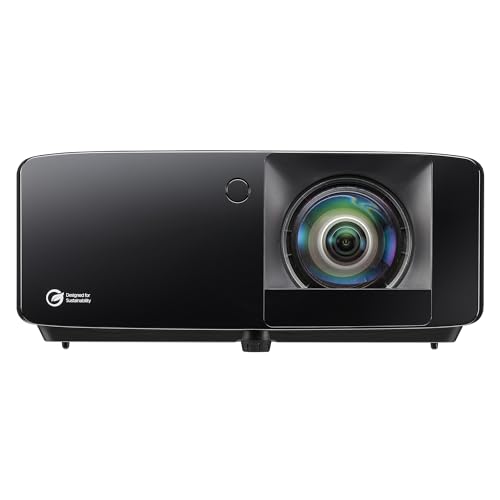

Picture this: it’s Friday night, the popcorn is ready, and you’re about to watch the latest blockbuster. But your TV screen is just too small to capture the epic scale of the film. You want a cinematic experience, but you don’t have a dedicated home theater room. This is where a mini projector comes in. These compact devices can project a massive, 100-inch or larger image onto any wall, turning your living room, bedroom, or even your backyard into a personal movie theater. In this guide, we’ll explore the best mini projectors for movies in 2026, focusing on models that deliver exceptional picture quality, smart features, and ease of use.
Whether you’re a movie buff, a casual streamer, or a family looking for fun weekend activities, we’ve got you covered. We’ve evaluated a range of projectors, from budget-friendly options to feature-packed smart projectors, to help you find the perfect one for your needs. We’ll break down the key features, pros, and cons of each model, so you can make an informed decision. If you’re also considering an outdoor setup, you might want to check out our best mini projector for outside guide.


Buying Guide: What to Look for in a Mini Projector for Movies
Choosing the right mini projector can be overwhelming with so many options available. To simplify your decision, we’ve identified the most critical factors to consider. These criteria will help you focus on what matters most for an immersive movie-watching experience.
Resolution and Brightness
The resolution determines the sharpness of the image. For movies, a native 1080p (Full HD) resolution is highly recommended for crisp, detailed visuals. Many projectors claim to support 4K, but they often mean they can accept a 4K signal and downscale it to their native resolution. True 4K projectors are usually more expensive. Brightness, measured in ANSI lumens, is equally important. A brighter projector (around 300 ANSI lumens or more) will perform better in rooms with some ambient light, while lower brightness models are best for dark rooms. For the best picture quality, always use your projector in a dark or dimly lit room. If you plan to watch during the day, consider a model with higher brightness and use blackout curtains.
For more on how to get the best picture in various lighting conditions, you might find our guide on outdoor projectors for daylight helpful, as it covers similar principles.
Smart Features and Connectivity
Modern mini projectors offer a range of smart features that enhance convenience. Built-in WiFi and Bluetooth allow you to stream content wirelessly from your phone, tablet, or laptop, and connect external speakers or headphones. Some projectors, like the Aurzen Roku TV models, come with a full smart TV operating system (Roku TV) built-in, giving you access to popular streaming apps like Netflix, Hulu, and Prime Video without needing an external streaming device. This can be a game-changer for movie nights. Additionally, consider the available ports: HDMI is essential for connecting a laptop, game console, or TV stick, while USB ports allow you to play media files directly from a flash drive.
Portability and Design
If you plan to move your projector between rooms or take it outdoors, portability is key. Look for a compact and lightweight design that’s easy to carry. Some projectors feature built-in gimbal stands or rotatable bases, allowing you to project onto the ceiling or adjust the angle easily. Auto focus and auto keystone correction are also valuable features that save you time and effort in setting up the image. These features automatically adjust the focus and correct any trapezoid distortion, ensuring a sharp, rectangular image every time.
Audio Quality
While picture quality is paramount, don’t overlook the audio. Most mini projectors have built-in speakers, but their quality varies significantly. Some models, like the Aurzen D1R, feature dual 5W speakers with Dolby Audio for a more immersive sound experience. If you’re an audiophile, you’ll likely want to connect the projector to an external soundbar or Bluetooth speaker for richer, more powerful sound. Check if the projector has Bluetooth or an audio out port to easily connect to your preferred audio setup.
Final Thoughts
After reviewing the top contenders, our overall recommendation for the best mini projector for movies is the Aurzen Roku TV D1R Smart Portable Outdoor for its seamless Roku integration, excellent 1080p picture, and user-friendly auto focus and keystone features, making it a fantastic choice for both indoor and outdoor movie nights. If you’re looking for a more budget-friendly yet highly capable option, the Mini Projector with Wifi and Bluetooth from YGSKK offers native 1080p resolution, WiFi 6 connectivity, and a 210° rotating stand, providing great value for money and flexibility for various viewing angles.
Frequently Asked Questions
What is the ideal brightness for a mini projector for movies?
For the best movie experience in a dark room, a projector with at least 300 ANSI lumens is recommended. This ensures a bright, vivid image. If you plan to watch in a room with some ambient light, you’ll need a brighter projector, but for most home theater setups, 300-500 ANSI lumens is a sweet spot.
Can I stream Netflix on a mini projector?
Yes, many modern mini projectors come with built-in streaming apps like Netflix, Hulu, and YouTube. Models with Roku TV built-in, such as the Aurzen D1R, provide the most seamless experience. Alternatively, you can connect an external streaming stick (like an Amazon Fire Stick or Roku Stick) via HDMI to any projector with an HDMI port.
Do I need a screen for a mini projector?
While a projector can project onto any flat, white wall, a dedicated projector screen enhances the image quality significantly. Screens provide a smoother surface, better color accuracy, and higher contrast. For the best movie experience, we recommend using a screen. For more tips on setting up an outdoor movie area, check our outdoor projector and screen package guide.
How far should a mini projector be from the screen?
The distance depends on the projector’s throw ratio. Most mini projectors have a throw ratio between 1.2:1 and 1.5:1, meaning for a 100-inch screen, you’ll need to place the projector about 8 to 10 feet away. Some models offer a short throw ratio (like 0.9:1), which allows you to place them closer to the screen, ideal for small rooms. Always check the manufacturer’s specifications for the recommended projection distance.