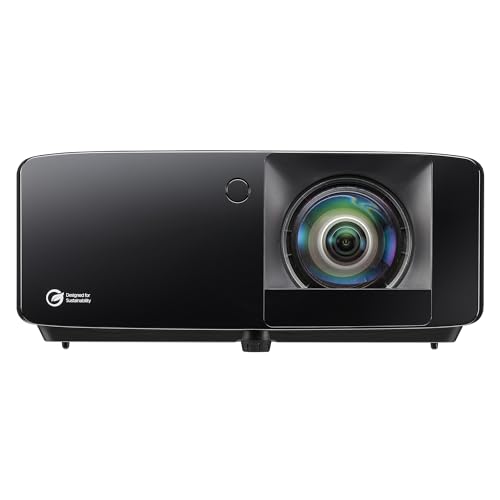

Imagine this: you have a fantastic projector, but every time you try to watch a movie in your living room during the day, the image looks like a faded ghost of what you saw in the dark. The culprit is ambient light, and the solution is an ALR (ambient light rejecting) screen. This guide cuts through the noise to bring you the best ALR screen for bright rooms in 2026, covering options from ultra-affordable portable screens to high-end motorized models. Whether you are a dedicated home theater enthusiast or just want to enjoy a game without closing the curtains, we have you covered. If you are also exploring projectors, check out our guide to the best projector for outdoor movies for complementary insights.


Buying Guide
Screen Material and Gain
The heart of any ALR screen is its material. Different coatings and base colors affect how much light is rejected and how bright the image appears from various seating positions. Gain measures the screen’s reflectivity; a gain of 1.0 is neutral, while higher values (like 2.0 or 2.7) boost brightness from the center sweet spot. For bright rooms, a gain above 1.0 is often beneficial, but be aware that high gain can narrow the viewing angle. Materials like SilverMagic’s proprietary coating or CineGrey 4D are engineered specifically for this challenge.
You will also encounter terms like “gray screen” which improves black levels by absorbing ambient light. The trade-off is that a gray screen may reduce overall brightness, so it pairs best with projectors that have ample lumens. For more on choosing the right projector, see our top projectors under $1000 for home theater in 2026.
Screen Type: Fixed Frame, Motorized, or Portable
Your room’s layout and your lifestyle will dictate the best screen type. Fixed frame screens, like the SilverMagic Fixed Frame High Gain model, offer the flattest surface and best image quality but are permanent fixtures. Motorized screens, such as the Elite Screens 106″ model, roll down from the ceiling, preserving your wall space and providing a clean, automated setup. For ultimate flexibility, portable ALR screens like the AAJK 120″ Outdoor model can be set up indoors or outdoors and packed away when not in use. If you are working with a small space, you might also want to explore the best short throw projector for small spaces.
Viewing Angle and Room Layout
ALR screens often have a narrower viewing angle than standard white screens because they are designed to reflect light back toward the projector and reject light from above. A screen with a 160° or 170° viewing angle is more forgiving for wider seating arrangements. If you have a long sofa or multiple rows of seating, look for screens that maintain brightness and contrast at the edges. The NothingProjector ALR Screen boasts a 170° viewing angle, making it a strong contender for family rooms.
Also consider the projector type. Some ALR screens are specifically designed for standard throw projectors, while others work with ultra-short throw (UST) models. Make sure to check compatibility before purchasing, as using the wrong combination can lead to hot-spotting or poor image uniformity.
Final Thoughts
Choosing the best ALR screen for bright rooms ultimately comes down to balancing your budget, room conditions, and desired convenience. For a no-compromise home theater experience in a well-lit space, the Elite Screens 106″ Motorized Projector Screen with its CineGrey 4D material is a top-tier investment that delivers exceptional contrast. If you prefer a more affordable and flexible solution for both indoor and outdoor use, the 120in Outdoor ALR Projector Screen by AAJK provides impressive light rejection in a portable, easy-to-store package. Whichever you choose, you will finally be able to enjoy your projector on your terms, day or night.
Frequently Asked Questions
Can I use an ALR screen with any projector?
Most ALR screens are designed for specific projector types. Some are optimized for standard throw projectors, while others work with ultra-short throw (UST) models. Always check the manufacturer’s specifications to ensure compatibility with your projector’s throw ratio and brightness. In 2026, many screens clearly state their intended projector type.
Will an ALR screen make my image look dark?
Not necessarily. While ALR screens do reduce overall light output compared to a standard white screen, they improve contrast by rejecting ambient light. The perceived brightness depends on your projector’s lumens and the screen’s gain. A high-gain ALR screen can actually make the image appear brighter in the center seating position than a standard screen in a bright room.
How do I clean an ALR projector screen?
Cleaning methods vary by material. Many portable screens can be gently wiped with a microfiber cloth, and some are even machine washable. For fixed or motorized screens, use a soft, dry cloth or a specialized screen cleaning kit. Avoid using harsh chemicals or abrasive materials. Always refer to the manufacturer’s care instructions.
What is the difference between ALR and CLR screens?
ALR (Ambient Light Rejecting) screens are a broad category that reject light from various angles. CLR (Ceiling Light Rejecting) screens are a subtype specifically designed to reject light coming from above, such as ceiling lights or windows near the ceiling. In practice, many modern screens combine both technologies. For dedicated home theaters, a CLR screen can be particularly effective if your primary light source is overhead.